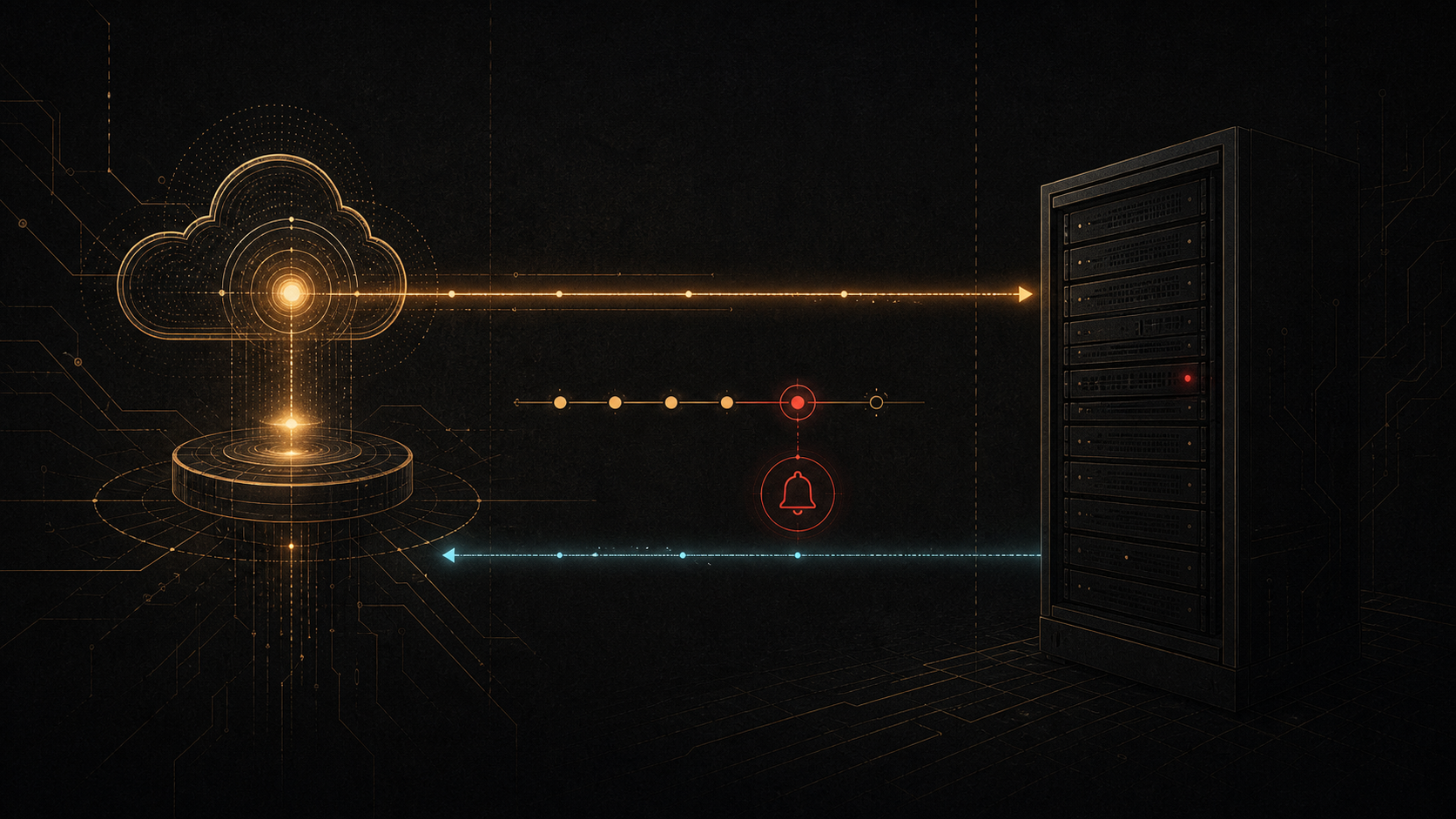
Replacing Uptime Kuma with Cloudflare Workers: a monitor that survives the server
How I moved monitoring outside the server with Cloudflare Workers, D1, a public status page, and Telegram notifications for outages and recovery.
04 / TRANSMISSION LOG
Thoughts on development, algorithmic trading, and building products.
How I moved monitoring outside the server with Cloudflare Workers, D1, a public status page, and Telegram notifications for outages and recovery.
Your Claude Code is in one terminal, your Codex is in another, and you are the copy-paste layer between them. Buzz is Block's open-source workspace where agents join channels as members with their own keys — here is how the ACP harness wires them up, what it actually buys you, and what is not finished yet.
A source-checked look at how Last30Days researches Reddit, X, YouTube, Hacker News, and Polymarket from a local machine, ranks results, removes duplicates, and handles failures.
How executable skills, project memory, focused tasks, fresh sessions, and independent review make AI-assisted coding predictable.
How narrow AI workers, isolated context windows, and a forward-only DAG make a multi-agent research system easier to inspect and debug.
Why an AI-native company needs machine-readable memory, quality gates, observer agents, and an explicit learning loop.
A source-based look at a skills-driven workflow: on-demand instructions, technical specifications, ticketed planning, and review boundaries for Claude Code agents.
A source-attributed review of the performance, cost, self-verification, and safety claims made about Opus 5 in a frontier-model comparison.
A source-based look at Gigatoken's claimed tokenizer speedup, its SIMD and cache design, the benchmark conditions, and its current limits.
A source-based argument about Kimi K3, export controls, open weights, talent, and why model infrastructure may matter more than a single frontier release.
A source-based look at Liquid AI's continuous-time models, their proposed hybrid design, edge deployments, and the limits of the transformer comparison.
A practical model of agent harnesses: tool execution, context assembly, sandboxing, state, and bounded error recovery.
How to choose between fixed workflows and agent-selected routes, account for cost and observability, and use LangChain and LangGraph in their respective roles.
A cautious framework for evaluating where an agent can perform bounded work, how to add acceptance gates, and where costs and risk still remain.
Kimi K3 is Moonshot AI's 2.8-trillion-parameter open-weight Mixture-of-Experts model. A practical look at its architecture, the vendor's evaluations, API pricing, deployment limits, and the security responsibilities that come with open weights.
Knowledge graphs can give an AI system structured mathematical evidence, but they do not prove an algebraic result by themselves. A practical look at neurosymbolic pipelines, Paths-over-Graph, KG-RAR, and where formal verification belongs.
PagedAttention manages the KV cache in fixed-size blocks, reducing allocation waste and enabling larger batches. What that changes, where continuous batching helps, and what the original vLLM results actually show.
Life Harness is a research framework for frozen LLM agents in deterministic benchmark environments. It adds an environment contract, procedural skills, action realization, and trajectory regulation around the model.
Model routing selects among models according to task, quality, budget, latency, availability, and data-residency requirements. A practical guide to routing policies, evaluation, cache locality, and their tradeoffs.
A practical pattern for preserving project context across agent sessions: concise, versioned notes with sources, review, and a clear loading policy. How it complements retrieval and Claude Code memory.
MASFactory turns natural-language intent into an editable workflow representation through a human-in-the-loop process. What its Vibe Graphing approach demonstrates, what its construction-cost figures mean, and where the limits are.
Tool calling looks similar across providers, but message shapes, streaming, reasoning state, and caching differ. A practical guide to what a translation proxy must preserve and when a higher-level integration is a better fit.
An agent's model is only one part of its behavior. Prompts, tools, context, recovery, evaluation, and memory form the harness around it. What current research says, and how to measure its effect on quality and token use.
CCToggle is a small command-line utility for temporarily disabling Claude Code plugins and user-scope MCP servers, then restoring the state it changed. Its commands, configuration scope, and operational limits.
A practical split between receiving email with Cloudflare Email Routing and sending it through Resend. How the DNS records fit together, what to verify, and how to let an agent send notifications safely.
A practical guide to connecting an OpenAI-compatible GonkaGate endpoint to command-line agents. How to create and protect an API key, test the endpoint, configure a custom provider, and verify models and costs before a workload.
A practical graphify setup for Claude Code: build a searchable map of a repository, keep extraction separate from the main session, update the graph carefully, and check it before committing.
How OpenClaude keeps cloud and local model providers in one terminal workflow, where its provider profiles help, and what to verify before moving a coding workflow.
A practical workflow for turning NotebookLM audio and slides into a reviewable video, preparing captions and metadata, and publishing only after a final check.
A personal note on using Muxy to keep several coding projects visible, plus practical security and workflow checks before adopting a new terminal.
How Clother keeps provider settings scoped to a Claude Code launch, how to inspect a profile before use, and where wrappers stop helping.
A practical, measurement-first guide to lower context cost in Claude Code: smaller sessions, focused delegation, retrieval, compact tool output, caching, and API batching.
No posts found.